Jesus Gonzalez Ferrer
PhD candidate at UC Santa Cruz
I work in the Braingeneers group with David Haussler and Mohammed Mostajo-Radji, and part-time at Genentech in the AIBT group. Previously M.Sc. in Computational Biology (Universidad Politécnica de Madrid) and B.Sc. in Biotechnology (Universidad Miguel Hernández).
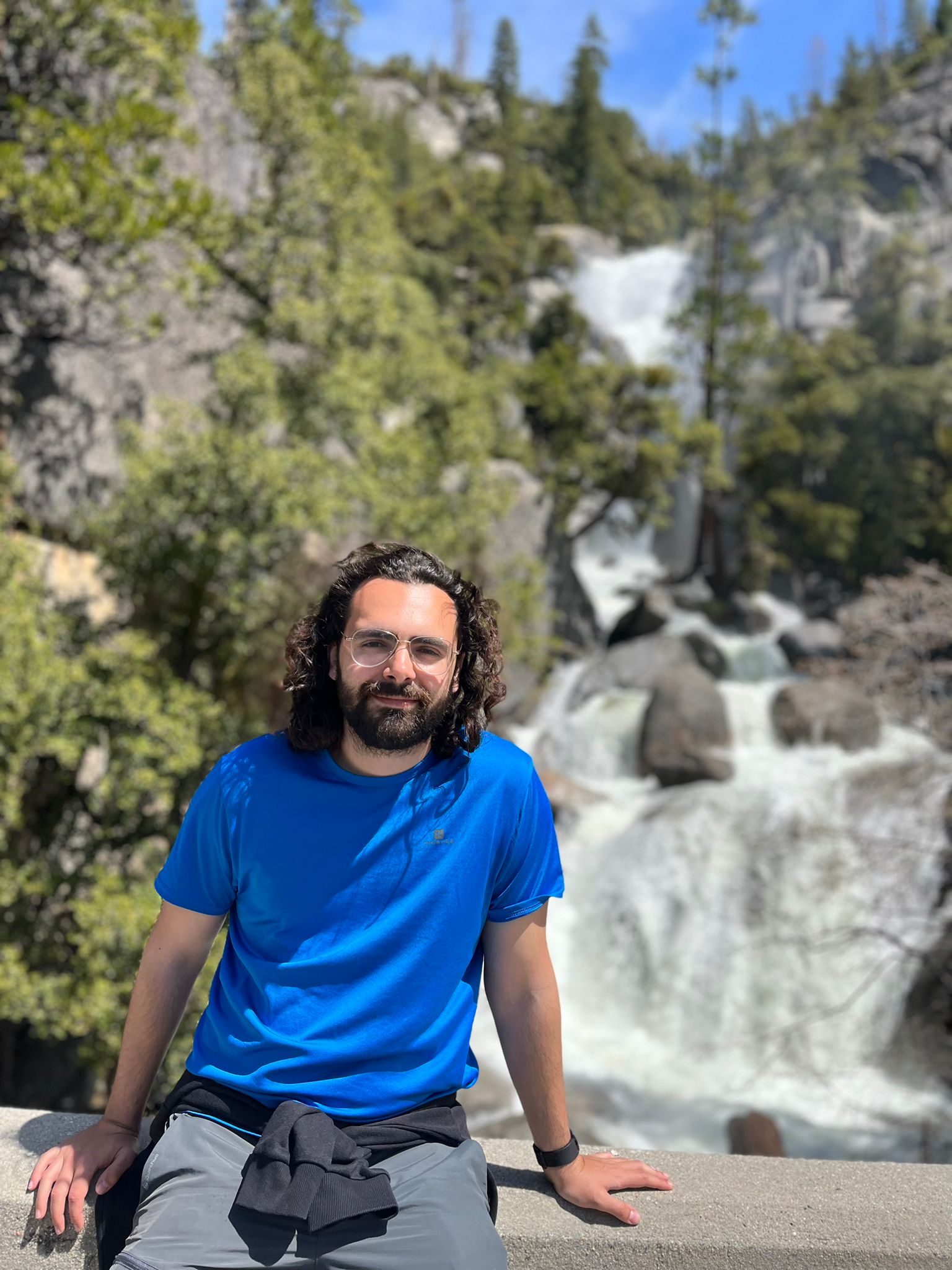
I am a PhD candidate in Bioinformatics & Bioengineering at UC Santa Cruz, working in the Braingeneers group with David Haussler and Mohammed Mostajo-Radji. Before Santa Cruz, I completed an M.Sc. in Computational Biology at the Universidad Politécnica de Madrid and a B.Sc. in Biotechnology at the Universidad Miguel Hernández.
My work sits at the intersection of genomics, neuroscience and deep learning. I build computational tools for single-cell data, including SIMS, a deep-learning label-transfer method for scRNA-seq. I also develop models for neural electrophysiology, including HIPPIE, a generative model that classifies and translates extracellular recordings across species, technologies and modalities. Alongside that, I work on protosequences and cell-fate plasticity in human cortical organoids. Broadly, I want to use machine learning to understand how the brain develops and computes.
Next: A Virtual Brain Organoid
The direction I care about most is a virtual brain organoid: a model you could give a genotype and a perturbation, and ask what the tissue is going to do next. Which cell types appear, how they mature, and how the network ends up firing.
Most of the individual pieces are moving quickly. We can perturb organoids at scale, measure transcriptomics and electrical activity from the same tissue, and train models that transfer across species and recording technologies. The harder problem is putting them together in a way that works across labs, cell lines, and experimental systems.
That may be less of an algorithm problem than a coordination problem. There is still no agreed way to evaluate whether a model really predicts organoid dynamics, which makes any claim that one does hard to interpret. That is the part I am most interested in helping build: not only models that make predictions, but the datasets and benchmarks that let us find out whether those predictions hold up.
What would a virtual brain organoid actually be? →Selected News
-
Aug 2026
Paper HIPPIE, our generative model for electrophysiological analysis across species, technologies and modalities, is out in Nature Communications.
-
Jul 2026
Paper Our cloud-connected pluripotent stem cell platform, which lets students run and observe live stem cell experiments remotely, is out in Stem Cell Reports.
-
2026
Award Awarded a Dissertation-Year Fellowship by UC Santa Cruz for 2026–27.
-
Jan 2026
Paper Our work on preconfigured neuronal firing sequences in human brain organoids is out in Nature Neuroscience.
-
Jan 2026
-
Jun 2025
Paper A step-by-step protocol for deep-learning-driven cell type label transfer with SIMS is out in STAR Protocols.
-
Apr 2025
Paper A perspective on automated, explainable high-throughput perturbation analysis in single cells is out in Patterns.
-
Apr 2025
Paper Our study of the fate plasticity of interneuron specification was published in iScience.
-
Mar 2025
-
Jun 2024
Paper SIMS, our deep-learning label-transfer tool for single-cell RNA-seq, was published in Cell Genomics.
Selected Publications
Full list on Google Scholar, or see the CV. (*) denotes co-first authorship.
-
NeuroscienceDeep Learning
HIPPIE: a generative model for electrophysiological analysis across species, technologies, and modalities
Nature Communications, 2026.
-
Neuroscience
Preconfigured neuronal firing sequences in human brain organoids
Nature Neuroscience, 29(1), 123–135, 2026.
-
GenomicsDeep Learning
SIMS: A deep-learning label transfer tool for single-cell RNA sequencing analysis
Cell Genomics, 4(6), 2024.
-
GenomicsDeep Learning
Toward automated and explainable high-throughput perturbation analysis in single cells
Patterns, 6(4), 2025.
-
NeuroscienceGenomics
Fate plasticity of interneuron specification
iScience, 28(4), 2025.
-
GenomicsTools
CytoVerse: Single-cell AI foundation models in the browser
bioRxiv, 2026.
-
Tools
Internet-enabled lab-on-a-chip technology for education
Scientific Reports, 14, 14364, 2024.
Writing
Notes on neuroscience, genomics and ML on The Brainformatician.
All posts →